Often, it happens that pain after an injury starts bothering a person only some time after the damage to the limb. Many people do not rush to see a doctor, relying on the belief that the problem will resolve on its own, but in most cases, without proper examination by a specialist and the prescription of accompanying treatment, the situation only worsens. Should you see a doctor after an injury, and how to understand the severity of the injury you’ve sustained? Today, we will try to figure this out.

Types of Injuries
Limb injuries are the most common reason why patients seek help from traumatologists. There are various types of injuries, differing in severity. The more serious the injury, the longer the rehabilitation period. Depending on the type and nature of the injury, the doctor conducts diagnostics and prescribes treatment. In the general classification of traumatic injuries, the following types of injuries are distinguished:
- Ligament Sprain;
- Ligament Tear;
- Dislocation;
- Contusion (bruise);
- Fracture.
Each of the injuries listed above is characterized by its own features, symptoms, treatment methods, and recovery period. To visually determine the type of injury you have sustained and roughly assess its severity, we recommend familiarizing yourself with the main symptoms caused by each type of injury.

Ligament Sprain: Symptoms, Characteristics, Treatment
Ligament sprains usually occur as a result of the patient making sudden movements that exceed the natural range of motion. The knee and ankle joints are most commonly affected by this type of injury. Despite the term “sprain” implying the “stretching” of the internal tissues of the ligament, in reality, any sprain involves microscopic tears in the fibers that form the ligament.
Important Note: Ligament sprains and tendon sprains are different concepts that should not be confused. While ligaments are elastic interbone connections, tendons are structurally stronger inner tissues that connect muscles to bones.
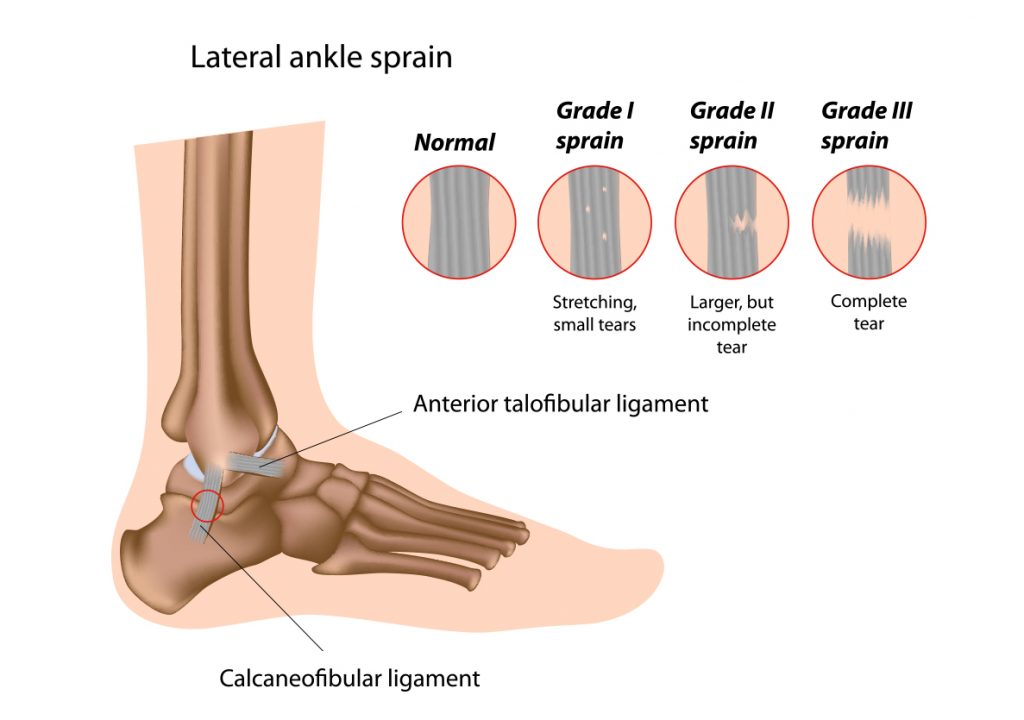
Symptoms of ligament sprain usually include the following:
- Pain occurs during movement of the injured joint and intensifies when trying to return the joint to its original position.
- Pain is felt when touching the injured area.
- Pain when attempting to put weight on the affected leg; in some cases, the person may be unable to bear weight on the injured limb.
- Swelling may also occur.
- Bruising and discoloration of the skin in the injured area.
In case of such an injury, it is necessary to immobilize the limb and fix it with a tight bandage. To provide optimal compression for immobilizing the leg, you can use an ankle brace or knee brace, depending on which area was injured.
Ligament tear. Symptoms, characteristics, treatment:
A ligament tear, like a ligament sprain, occurs due to abnormally excessive range of motion during movements. Ligament tears can be partial or complete. Such injuries often occur during intense workouts but can also happen in everyday situations. Ligament tears are categorized into three main degrees of severity:

1st degree: Partial tear where the overall integrity of the ligament is preserved, but some fibers are torn due to mechanical stress. Pain in this case is moderate. 2nd degree: More than 50% of the ligament is torn. This injury can lead to hematoma and swelling. The patient loses the ability to move the limb, and the joint becomes unstable. 3rd degree: 90-100% tear of the ligament. Severe pain, swelling, hematoma, and bruising are the main signs of a complete ligament tear.
Individual symptoms that indicate ligament damage include:
- Acute pain that occurs at the time of injury or develops after the trauma.
- Changes in skin color at the site of injury.
- Bruising.
- Swelling.
- The affected joint loses its functionality.
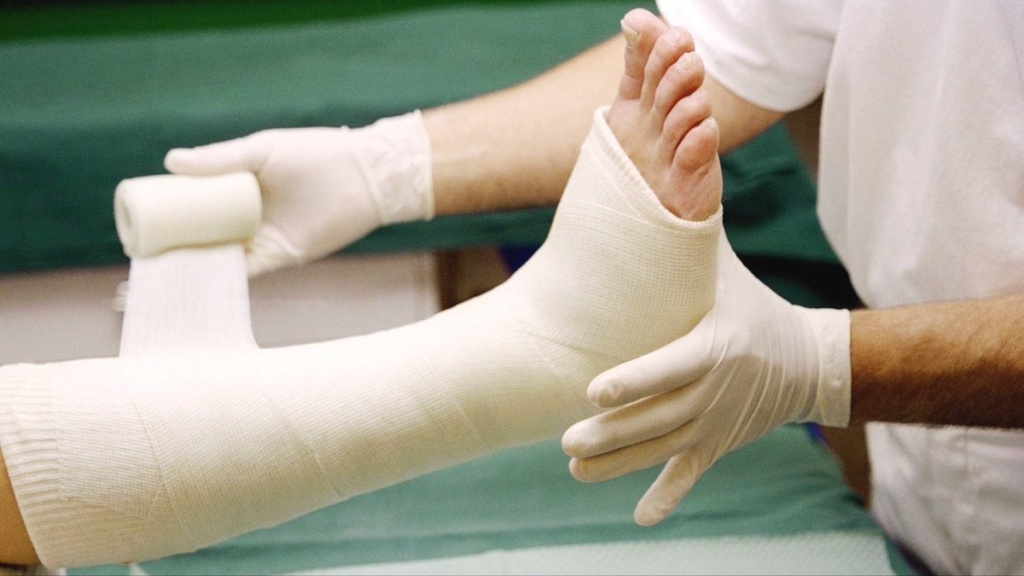
In case of partial or complete ligament tear, it is essential to immobilize the joint and seek medical attention at the nearest medical facility. X-ray examination will likely be conducted, and if a complete tear is confirmed, the doctor may apply a plaster cast to the affected area.
Dislocation. Symptoms, characteristics, treatment:
Dislocation is a joint injury in which the joint’s articulating surfaces are displaced. Usually, the joint capsule is also damaged in dislocations. These injuries can be caused by strong impacts, falls, or sudden movements with excessive range of motion.
Combined injuries, known as fracture-dislocations, can also occur. In such cases, the joint capsule is torn, and the joint surfaces are dislocated. Severe pain and springy resistance are common symptoms of dislocation. The symptoms of a dislocated limb include:
- External deformity of the joint.
- Abnormal position of the injured limb.
- Presence of pain.
- Loss of functionality in the joint.
- Inability to self-reduce the dislocated joint to its normal position.
In case of a dislocation, after diagnosis, doctors usually reduce the joint and then immobilize it securely using a plaster cast or orthosis. You can find orthosis products on the Garno Support online store.

Bruise. Symptoms, characteristics, treatment:
Bruises occur due to strong impacts or falls with awkward landings. The patient may experience pain, swelling, and possible bruising, and the joint may lose its normal function. The main symptoms indicating a bruise include:
- Pain in the injured area.
- Swelling.
- Hematomas or bruises.
- Partial loss of joint mobility.
If you can at least slightly put weight on the injured limb, it is likely that you have suffered a bruise. For an accurate diagnosis, it is necessary to consult a specialist and undergo diagnostic procedures. In any case, you will likely require a brace or support for the bruised area. Garno Braces provide excellent stabilization, immobilizing the injured limb and protecting it from excessive loads. Due to their well-designed fixation system, braces fit securely on the joint, applying gentle compression to prevent swelling.
Fracture. Symptoms, characteristics, treatment:
As you may have guessed, a fracture is the most complex injury, requiring comprehensive and prolonged treatment. The recovery period for a fracture depends on the nature and severity of the injury, as well as the patient’s age. A fracture not only damages the bone tissue but can also affect ligaments, tendons, and other internal joint components due to the mechanical impact. The symptoms of a fracture include:
- Sudden, excruciating pain.
- Swelling (sometimes the joint may increase in volume several times due to internal bleeding).
- Changes in skin color at the site of injury.
- Changes in skin temperature at the site of injury.
- Inability to put weight on the affected limb.
- Hematomas and bruising.

If you experience such symptoms, you should go to the nearest trauma center to have an X-ray taken and receive appropriate care. To alleviate additional stress on the joint and protect it from further damage, you need to use a stabilizing bandage or brace to fully immobilize the limb.
Braces for Injuries: A brace is a convenient and practical product that effectively immobilizes the affected limb. Regardless of the type of injury, you will need to immobilize the injured leg to reduce additional stress on it and protect the joint from strain.
Ankle braces are made from high-tech materials that are lightweight and hypoallergenic. The well-designed fastening system allows you to immobilize the limb without compromising blood circulation. If you want to speed up the recovery process after an injury, you will need a specialized medical brace.