
The heel area of the foot experiences the greatest load during walking, running, and standing. Heel pain can restrict a person’s ability to move freely, often leading to exacerbation or the appearance of other problems. Unfortunately, self-treatment and sometimes unjustified treatments prescribed by doctors can affect mechanisms that should not be affected in such cases.
While some patients may find relief in traditional folk remedies, they may have little effect. On the other hand, resorting to “heavy artillery” such as hormonal injections or unnecessary surgeries can cause irreparable harm. In this article, I will discuss the most probable causes of heel pain, possible ways of prevention, and safe treatments.
Characteristics of the Heel Area:
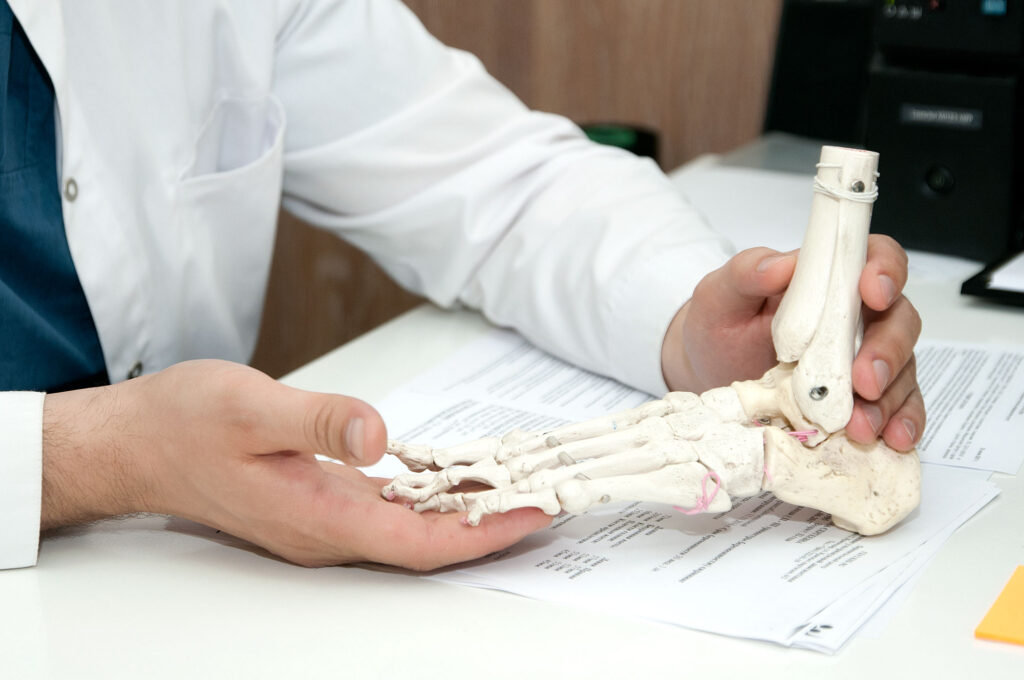
The calcaneus (heel bone) is the largest and strongest bone in the foot. Throughout the day, it experiences enormous loads as it serves as the primary point of support during walking, running, and standing. The back surface of the calcaneus is connected to the powerful Achilles tendon, while the lower part is linked to the strong and wide plantar aponeurosis. Over a dozen tendons and ligaments closely connect in the heel area.
The bone is protected by a thick layer of adipose tissue and tough skin. The fat beneath the heel is packed into rounded granules for enhanced strength and cushioning. The thick skin of the sole consists of five layers and has considerable thickness to withstand adverse factors. Natural joint mobility, particularly the oscillation of the longitudinal arch and the calcaneus, helps absorb the impact load.
Most Common Causes of Heel Pain:
Heel pain can result from acute or chronic conditions, either due to diseases or injuries. In this article, we will focus on chronic pathologies, as fractures and contusions are separate complex topics. Chronic or acute non-traumatic pain is more commonly caused by conditions such as:
- Plantar fasciitis,
- Achilles bursitis,
- Haglund’s deformity,
- Stress fracture of the heel,
- Tarsal tunnel syndrome (compression of the foot nerve),
- Fat pad atrophy of the foot,
- Osteoarthritis and arthritis of foot joints.
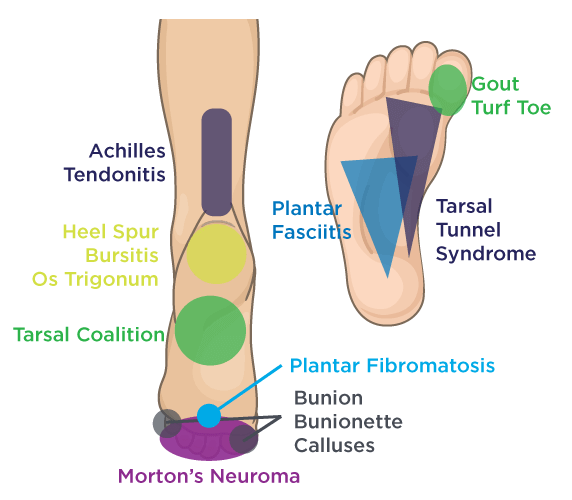
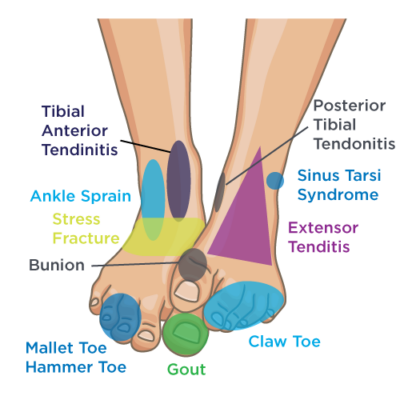
If you experience pain in the back of the heel, it is likely due to damage or overloading of the Achilles tendon. Such inflammation can occur in both athletes and individuals not exposed to physical exertion. The pain may intensify when attempting to stand on tiptoes or after prolonged walking. The condition is often accompanied by mild swelling on the sides of the tendon, and the intensity of the pain can vary from sharp and piercing to agonizingly dull.
The cause of pain on the bottom surface of the heel is often microtears and inflammation of the plantar fascia. Patients often think that the pain is caused by a heel spur found on an X-ray, but this bony protrusion is merely a sign of the overloading of the plantar fascia. The direct causes of plantar fasciitis include foot deformities (flat feet, high arches), reduced flexibility of ligaments and tendons, and sports-related overloads.
Other possible causes of heel pain are less common but still quite widespread. Among the sources of inflammation can be both harmless and quite dangerous processes. Therefore, if you experience any signs of foot problems, it’s essential to consult a specialist, such as an orthopedist, surgeon, or your family doctor.

How NOT to Treat Heel Pain:
Before discussing the essential aspects of treatment, it’s worth noting what you should not do.
The characteristics of the fat pad and skin covering the heel exclude the effective action of any ointments or gels, as they simply cannot penetrate to the necessary depth. Therefore, applying local anti-inflammatory or other remedies has very little effect. For long-existing problems, it’s not recommended to take anti-inflammatory drugs orally, as there is a risk of developing peptic ulcers and drug-induced kidney inflammation.
Steroid injections are highly undesirable. Besides being extremely painful due to the density of the skin and fat in the heel, there is a significant risk of dissolving the adipose tissue. This will increase the intensity of pain manifold, and adequate treatment in such cases has not been developed yet.
Surgery is also risky. It is often recommended after a long period of ineffective conservative treatment, but even the treating physician may not always be able to explain the advantage of surgery precisely. Surgical interventions usually involve destroying the nerves that transmit pain, but they tend to “regrow” shortly afterward. Any attempts to remove a heel spur, cut the plantar fascia, or the Achilles tendon can lead to serious complications.
How to Treat Heel Pain:
In most cases, the root cause of heel pain is purely mechanical: overloading the heel with excessive weight, excessive tension in the plantar fascia or Achilles tendon. Therefore, for a comprehensive solution to the problem, the focus should be on correcting the biomechanics rather than isolated symptom management. Of course, during exacerbations, pain relief measures are necessary. Some universally applicable advice for short-term relief includes:
- Provide maximum rest to the foot. Lie down and avoid putting pressure on the foot.
- Apply an ice pack or a bottle of ice to the painful area for 15-20 minutes. Repeat this every 2-3 hours. It is essential to apply something cold through a layer of fabric to avoid frostbite.
- If there are no contraindications, take an anti-inflammatory medication as recommended by the doctor. This won’t solve the problem but will reduce the intensity of pain.
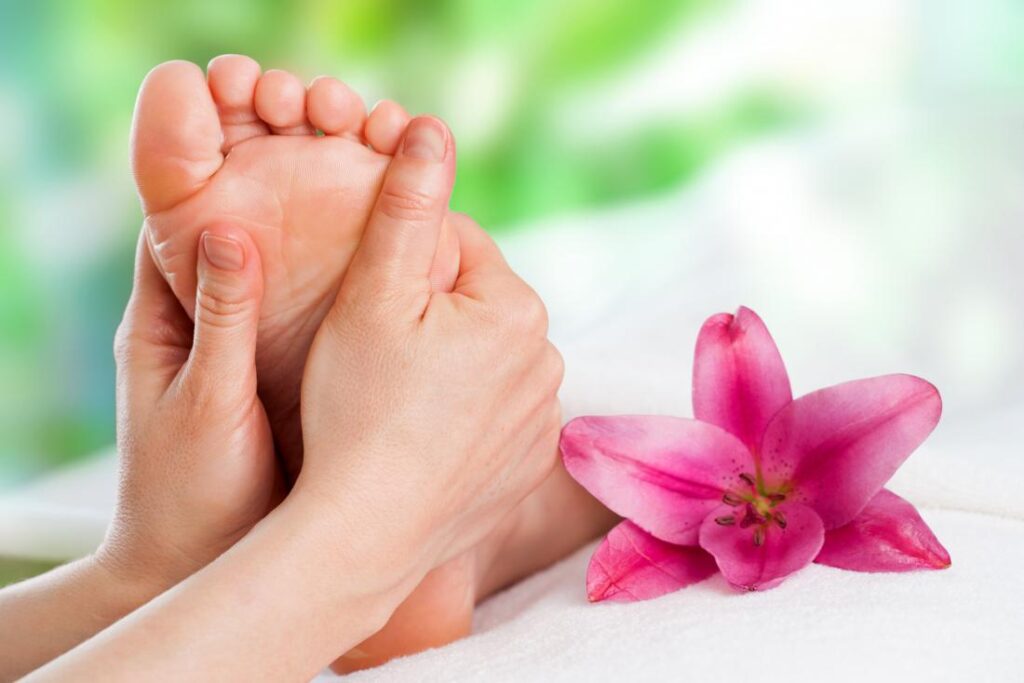
During periods when the pain is minimal or not present, it is advisable to work on correcting the foot condition. Exercises to increase the flexibility of the plantar fascia, calf muscles, and toe mobility are helpful. Massage and reflexotherapy (using applicators, massagers) can have a beneficial effect. Significant relief can be achieved through weight correction. Many patients experience good results by losing even 2-3 kilograms.

Safe and Effective Solutions for Correcting Causes and Symptoms:
1. The heel area experiences the most significant load during movement. Conditions like flat feet, high arches, and reduced ligament flexibility can lead to heel injuries, pain, and swelling. To evenly distribute the load and relieve some pressure from the heel, orthopedic insoles are helpful.
2. To alleviate pain in the Achilles area, special Ankle Braces are effective. They gently massage the inflamed area, regularly applying targeted compression with anatomically designed inserts. Soft heel cushions can relax the calf muscles and reduce tension on the Achilles tendon, which is beneficial for patients with Achilles bursitis and Achilles tendinopathy. These cushions can be used in combination with a specialized ankle brace or purchased separately.


